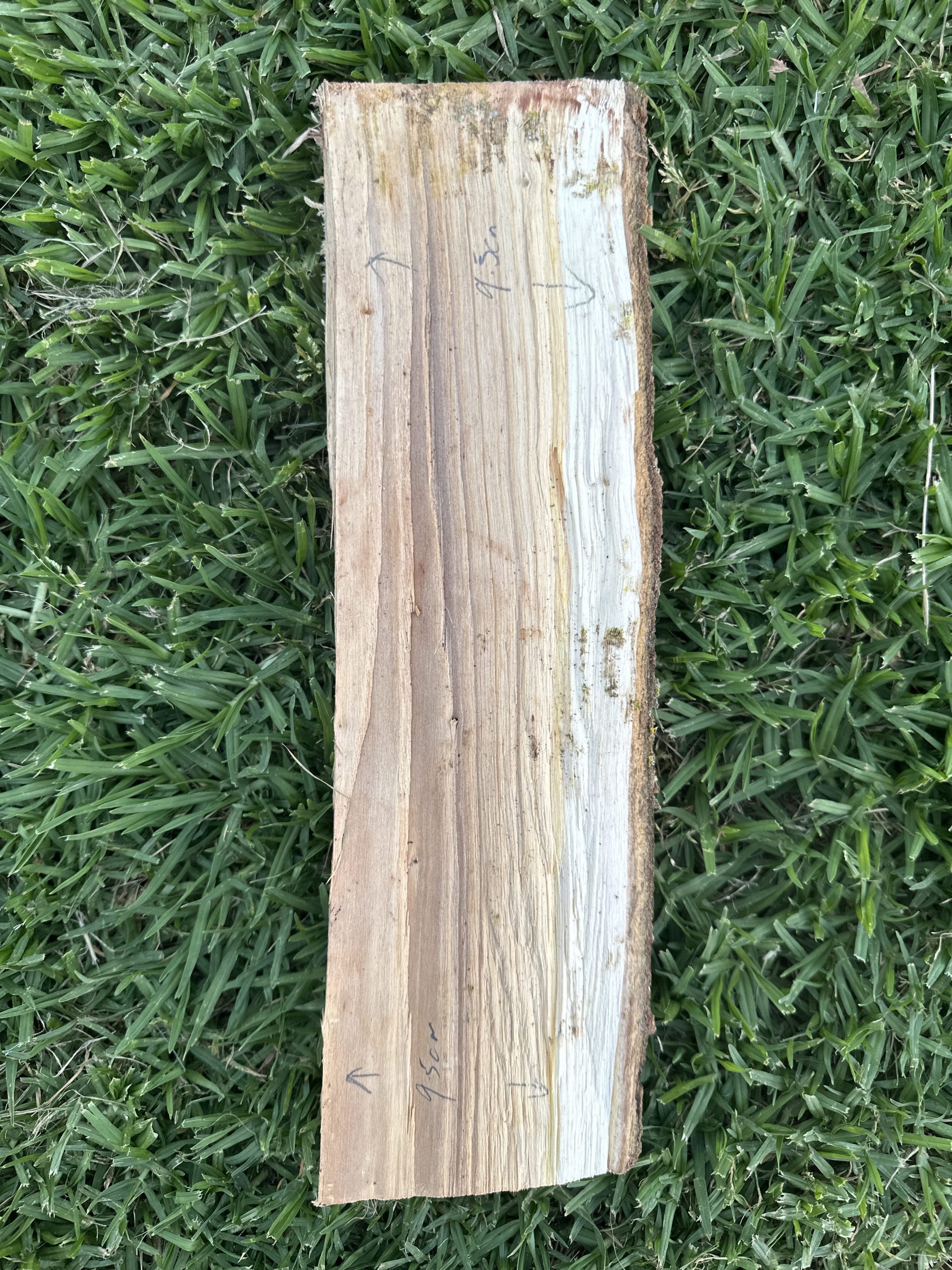
We’ve all been there: you’ve got your new carving knife, a fresh log from the garden, and high hopes. But twenty minutes later, your hands are cramping, the wood is splintering, and you’re wondering if you’re just “not a natural.”
Here’s a secret: It might not be you. It might be the wood.
Choosing a dense, seasoned hardwood when you are still mastering your knife grips is like trying to learn to drive in a Formula 1 car. To build confidence, you need wood that is soft, forgiving, and “buttery.”
Here are the five best woods for beginners to help you get that perfect “clean shave” every time.
- Liquidambar – The Suburban Superstars
If you live in a suburban area, Liquidambar (Liquidambar styraciflua) is likely your new best friend. Known for its star-shaped leaves and spiky “gumball” seeds, it’s a common ornamental tree that carvers adore.
- The Feel: When green, it is remarkably soft and has a very straight grain that makes splitting with an axe a breeze.
- Why it’s perfect: It is “short-grained,” meaning the wood fibres snap cleanly rather than peeling off in long, frustrating strings. It’s the perfect wood for practising your “thumb-push” and “chest-lever” cuts.
- Silver Poplar – The “Confidence Builder”
If I could give every first-time carver a piece of wood, it would be Silver Poplar (Populus alba). This is what I use when teaching my beginner spoon carving workshops.
- The Feel: It is incredibly soft. Your knife will glide through it with minimal effort, which allows you to focus 100% on your hand positioning and safety.
- Why it’s perfect: It grows quickly and is often found in parks. Because it’s so easy to carve, you can finish a spoon in one sitting, giving you that vital “win” early on.
- Birch – The Universal Teacher
There is a reason the masters of the craft always return to Birch (Betula pendula). It is the middle ground of the woodworking world.
- The Feel: It offers just enough resistance to teach you how grain direction works, without being so hard that it causes fatigue.
- The Reward: Birch holds a burnish beautifully. Once you finish your spoon, you can rub it with a smooth stone or the back of your knife, or piece of deer antler to give it a natural, glossy shine.
- Willow – The Forager’s Favorite
You can find Willow (Salix spp.) near almost any creek or riverbank, and it is a beginner’s dream for lightweight utensils.
- The Feel: When green, Willow is almost wet to the touch and very easy to slice.
- Why it’s perfect: If you’re worried about hand strength, Willow allows you to carve for longer periods without getting tired. I find it a little soft and sometimes spongy depending on the species of Willow but it’s a great wood to build up your knife skills.
- Alder – The “Butter” Wood
If you want to feel like a master carver instantly, find some Alder (Alnus glutinosa).
- The Feel: Carving Alder is often described as “carving cold butter.” It is consistent, soft, and has a lovely orange-to-pink hue when first cut.
- Why it’s perfect: It grows rapidly and it dries relatively quickly without the dramatic cracking you find in fruitwoods.
Beginner Wood Comparison
| Wood Type | Ease of Carving | Availability | Why Carvers Love It |
| Liquidambar | ★★★★★ | High (Suburbs) | Clean, easy splits |
| Silver Poplar | ★★★★★ | High | Effortless slicing |
| Birch | ★★★★☆ | Medium | Great for learning grain |
| Willow | ★★★★★ | Very High | Lightweight and soft |
| Alder | ★★★★★ | Medium | Very forgiving / Beautiful colour |
My Advice for Your First Carve
Don’t worry about making a perfect spoon. Your first five or more spoons should be about learning how the wood reacts to your knife. If you start with these five species, you’ll spend less time fighting the timber and more time enjoying the rhythm of the shavings falling at your feet.
Not sure where to find these woods in your local area?
Tell your friends and neighbours to keep tree prunings for you and to keep an eye out! Once people know you are after a specific type of wood you’ll ensure a good supply! You can also ask for “waste” wood from local arborists.
Which wood are you planning to try first? Tell me in the comments below!
I often have spoon blanks in stock and billets, so keep an eye on my social media or come into our shop in Chiltern. And if you’re chasing a particular type of wood, let me know and I’ll see if I can source some!
If you want to learn how to safely carve spoons, come and carve with me at one of my workshops!
Visit our Chiltern store at 53 Conness Street. Check Google for current opening hours.